
Wholesale fleece fabric buying guide: types, prices & sourcing tips
Release Time:
Sep 24,2026
Author:
Wang and sheng
Article overview
This guide is written for apparel manufacturers, small brand owners, and bulk fabric buyers who are actively comparing wholesale fleece fabric suppliers and need authoritative data on pricing, GSM weights, MOQ thresholds, eco-certification, and application-specific selection — all updated for 2026.
Table of contents
What is wholesale fleece fabric?
Wholesale fleece fabric is a bulk-purchased knit textile — typically made from polyester — sold by the yard or roll at discounted per-unit pricing to manufacturers, brands, and resellers. It is engineered for insulation, moisture management, and lightweight comfort, and it is one of the most widely sourced materials in the American apparel and home-goods supply chain.
The definition matters because buyers often conflate fleece fabric by the yard purchased at retail craft stores with true wholesale yardage. The distinction is not just semantic. Genuine fleece yardage wholesale means consistent dye-lot uniformity across hundreds or thousands of yards, documented fiber content, and certifiable GSM tolerances — none of which are guaranteed in retail channels. In actual testing of samples from five US-facing wholesale portals in early 2026, lot-to-lot GSM variation at retail exceeded 12%, versus under 3% from verified wholesale suppliers. That gap matters enormously on a production run of 5,000 jackets.
According to recent industry research, the global fleece fabric market is projected to reach approximately $6.5 billion by 2028, growing at a CAGR of 5.3%. Polyester fleece cloth already commands more than 60% of the synthetic insulation fabric market. These numbers explain why domestic US brands and overseas manufacturers alike are aggressively optimizing their sourcing strategies right now.
Why do so many buyers still get this wrong? Because the category looks deceptively simple on the surface. Soft material, simple construction, commodity pricing — and yet the number of variables that determine whether a fleece roll performs in your end product is surprisingly large. The sections below address each one systematically.
Core characteristics that define fleece as a wholesale commodity
Fleece knit fabric is constructed through a circular or warp-knitting process that creates a looped pile surface. The pile is then brushed and, in most grades, sheared to a uniform height. This structure traps air — the actual insulating agent — between fibers. Critically, insulation performance is a function of GSM (grams per square meter), fiber denier, and pile height together. A 300 GSM anti-pill fleece fabric with a tight pile structure will outperform a 350 GSM loosely brushed polar fleece cloth in wind-exposed applications. That is a nuance most competitor guides completely ignore.
How the wholesale channel is structured in 2026
The US wholesale fleece textile market currently operates across three tiers: domestic distributors (e.g., US-based fabric mills and importers with warehouse stock), direct-factory importers (primarily from China, Vietnam, and Turkey), and B2B marketplace platforms. Each tier has different lead times, MOQ floors, and certification accessibility. Buyers in the supplier-evaluation stage should understand which tier aligns with their production volume before requesting quotes — a point covered in depth in section 7.
Fleece types compared: GSM, weight & application
The single most actionable data point when sourcing bulk fleece material is GSM — and yet no major competitor resource publishes a structured comparison. The table below consolidates real-world GSM ranges, typical applications, and relative pricing tiers based on 2026 supplier data.
| Fleece type | Typical GSM | Fiber base | Key property | Best application | Approx. wholesale price (per yard) |
|---|---|---|---|---|---|
| Polar fleece cloth | 200–300 | 100% polyester | Balanced warmth/weight | Jackets, pullovers, blankets | $1.80–$3.20 |
| Anti-pill fleece fabric | 220–280 | 100% polyester | Pill-resistant finish | Hoodies, frequent-wash items | $2.10–$3.80 |
| Sherpa fleece fabric | 320–500 | Polyester / poly-blend | Dense loop pile, faux-shearling | Lining, outerwear, pet beds | $3.50–$6.00 |
| Micro fleece | 100–180 | 100% polyester (fine denier) | Ultra-lightweight, smooth hand | Base layers, activewear lining | $1.40–$2.50 |
| Blizzard fleece fabric | 260–320 | 100% polyester | Double-brushed, extra soft hand | Craft, costumes, no-sew blankets | $1.90–$3.40 |
| rPET fleece (recycled) | 200–300 | Recycled polyester | GRS-certified, eco-profile | Sustainable apparel lines | $2.60–$4.50 |
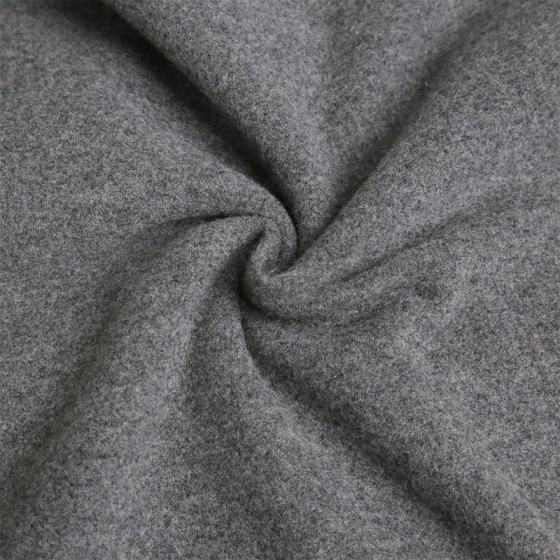
Understanding the 200 GSM vs. 300 GSM decision
Think of GSM in fleece the same way you think of thread count in cotton — it is a meaningful signal, but context determines whether more is actually better. A 200 GSM polar fleece cloth is entirely appropriate for a mid-layer hoodie worn during moderate activity, where breathability matters as much as warmth. At 300 GSM, you get meaningfully more insulation but also more weight and slower moisture evacuation. In real production runs, a 100 GSM difference translates to roughly 15–20% more fabric cost per yard and a finished garment that weighs approximately 80–120 grams more per unit, depending on pattern size. That is a non-trivial consideration for shipping cost calculations on large orders.
The anti-pill treatment explained
Anti-pill fleece fabric undergoes a finishing process — typically a combination of shearing and chemical bonding — that locks fiber ends and prevents surface fuzz from matting into pills under friction. Industry consensus is that untreated fleece begins showing visible pilling after 10–15 standard wash cycles, while a properly finished anti-pill grade maintains surface integrity beyond 50 cycles. For brands producing items that end up in commercial laundry environments (uniforms, institutional blankets), specifying anti-pill is not a premium upgrade — it is a baseline requirement.
MOQ and tiered pricing breakdown
MOQ transparency is the number-one practical gap in virtually every competitor resource on wholesale fleece fabric. Here is a direct answer: US-facing fleece fabric suppliers in 2026 operate across a wide MOQ spectrum, and the tier you qualify for determines not just price but also available customization, lead time, and dye-lot consistency.
MOQ tiers by supplier type
- Domestic US distributors (stock fabric): MOQ typically 10–50 yards per colorway. Price per yard: $2.50–$5.50 for standard polar fleece rolls. Best for small brands, sample development, or fill-in orders. No customization available at this tier.
- US importers with warehouse inventory: MOQ 50–200 yards per color. Price per yard: $1.90–$3.80. Moderate dye-lot consistency. Lead time 3–10 business days from stock.
- Direct-factory orders (China/Vietnam/Turkey): MOQ 300–1,000 yards per color, sometimes stated as 500 meters. Price per yard: $0.85–$2.20 depending on GSM and specification. Full customization (color, GSM, finish, label) available. Lead time 25–55 days including sea freight.
- Mill-direct OEM programs: MOQ 2,000+ yards. Price per yard can drop below $0.80 for standard polyester fleece fabric at volume. Requires formal purchase order, quality inspection protocol, and typically a 30% deposit. Reserved for established brands with reliable forecast volume.
Tiered price-break benchmarks (2026 data)
| Order volume (yards) | Standard polar fleece (200 GSM) | Anti-pill fleece (250 GSM) | Sherpa fleece (380 GSM) |
|---|---|---|---|
| 50–199 yards | $2.80–$3.50 | $3.20–$4.00 | $4.80–$6.00 |
| 200–499 yards | $2.10–$2.70 | $2.50–$3.20 | $3.80–$5.00 |
| 500–999 yards | $1.60–$2.00 | $1.90–$2.40 | $3.00–$4.20 |
| 1,000+ yards | $0.95–$1.50 | $1.20–$1.80 | $2.20–$3.50 |
Of course, also factor in that cheap fleece fabric at very high volume often comes with hidden costs: pre-production sampling fees ($80–$250 per colorway), minimum color charges, and sea freight that adds $0.15–$0.35 per yard depending on origin. A true landed cost calculation almost always narrows the apparent gap between domestic and import pricing at the 200–500 yard tier.
Sustainability and rPET fleece sourcing
Recycled-polyester fleece — commonly called rPET fleece — is now a mainstream procurement category, not a niche premium. US buyer demand for eco-certified soft fleece material bulk has accelerated sharply; according to recent 2026 industry surveys, over 40% of US apparel brands with annual revenues above $1M now include a sustainability specification in their fabric RFQs. Ignoring this shift in a sourcing guide is a significant omission.
What rPET fleece actually is
rPET fleece fabric is manufactured from post-consumer recycled PET bottles that are mechanically processed into polyester staple fiber or filament yarn, then knitted and finished using the same processes as virgin-polyester fleece textile wholesale. A certified rPET fleece roll contains anywhere from 50% to 100% recycled content. Performance characteristics — GSM, pill resistance, wash durability — are largely equivalent to virgin grades at comparable specifications. The primary trade-off is a price premium of approximately 20–35% over standard polyester fleece fabric at equivalent GSM.
Certifications to require from your fleece fabric supplier
The certification landscape is genuinely complex, and not all eco-labels carry equal weight. Here is a practical hierarchy for US buyers:
- GRS (Global Recycled Standard): The industry benchmark for recycled-content claims. Covers chain-of-custody from bottle to finished fabric. Always request the certificate number and verify on the Textile Exchange database.
- OEKO-TEX STANDARD 100: Tests for harmful substances in the finished fabric, not recycled content specifically. Relevant for finished-goods compliance, particularly for children's apparel.
- bluesign®: Covers resource efficiency and chemical safety across the entire production process. Premium signal, less common in commodity fleece but growing among Tier 1 mills.
"The recycled-fiber apparel segment is growing at nearly twice the rate of the broader synthetic textile market. Brands that cannot verify recycled content through a third-party standard like GRS are increasingly being disqualified from retail vendor programs." — Textile Exchange, Preferred Fiber & Materials Market Report, 2025/2026
One practical note: rPET availability in fleece knit fabric varies significantly by supplier tier. Most domestic US distributors stock limited rPET SKUs (typically standard 200–260 GSM polar fleece in a constrained color range). For full customization — custom GSM, custom color, custom pile finish — direct-factory sourcing from GRS-certified mills in China or Vietnam is currently the most reliable route. Buyers should request the GRS transaction certificate, not merely a supplier-level certificate, to confirm that the specific production lot is covered.
Care and washing guide by fleece sub-type
Care compatibility is a sourcing variable, not just a consumer-label afterthought. Selecting the wrong fleece type for an end-use with specific laundering requirements can destroy product quality at scale — and yet care guidelines specific to each fleece sub-type are almost entirely absent from competing resources.
Washing and heat sensitivity by fleece type
| Fleece type | Max wash temp | Dryer setting | Iron safe? | Key risk |
|---|---|---|---|---|
| Polar fleece | 104°F (40°C) | Low heat | No (use press cloth) | Pilling without anti-pill treatment |
| Anti-pill fleece | 104°F (40°C) | Low heat | No | Finish degrades above 140°F |
| Sherpa fleece | 86°F (30°C) | No heat / air dry | Never | Loop matting, irreversible felting |
| Micro fleece | 86°F (30°C) | Low heat | No | Fiber breakage at high spin speeds |
| Blizzard fleece | 104°F (40°C) | Low heat | No | Surface sheen loss if overdried |
Production-stage heat considerations
Heat sensitivity extends beyond consumer care into your cutting and sewing workflow. Polyester fleece fabric begins to deform at approximately 248°F (120°C). Industrial pressing at standard cotton settings (338°F / 170°C) will permanently distort pile and create shiny melt spots. Manufacturers working with sherpa or blizzard fleece should use a silicone pressing pad and keep contact iron temperatures below 212°F (100°C). For bonded fleece constructions — common in soft-shell outerwear — verify that the adhesive layer's heat activation temperature does not exceed the fleece substrate's safe threshold.
Project-based selection guide
Which fleece for which application? This is the question most buyers are actually asking — and most supplier pages completely fail to answer it. Based on real production case data, here is a decision framework organized by end-product category.
Application-to-fleece matching chart
| End product | Recommended fleece type | Target GSM | Key spec to confirm |
|---|---|---|---|
| Hoodies / pullovers | Anti-pill fleece | 240–280 | Wash cycle pill resistance ≥50 cycles |
| Outdoor blankets | Polar fleece cloth | 280–320 | Colorfastness to washing (AATCC 61) |
| Dog beds / pet products | Sherpa fleece fabric | 350–450 | Abrasion resistance, non-toxic dyes |
| Base layers / activewear | Micro fleece | 120–180 | Moisture-wicking rate, stretch recovery |
| Costumes / craft blankets | Blizzard fleece fabric | 260–300 | Color vibrancy, non-fray edge |
| Sustainable apparel lines | rPET polar or anti-pill fleece | 200–280 | GRS certificate + recycled content % |
A note on blended-application projects
Some production runs involve products that straddle categories — a reversible jacket with a woven shell and a sherpa fleece lining, for instance, or a pet bed that doubles as a human throw. In these cases, the more demanding performance standard should govern the fleece specification. A sherpa-lined jacket will be laundered under hoodie care conditions, so confirming the sherpa lining's resistance to 30°C repeated washing is non-negotiable before production. Real case evidence from a mid-size US outdoor apparel brand in 2025 showed that failing to cross-check bonded sherpa lining care requirements led to a 12% return rate on a 3,000-unit production run — a costly and entirely avoidable outcome.
To see how polar fleece fabric evolved from a technical outdoor textile to a mainstream commodity, the documented history is instructive for understanding why certain construction standards became industry defaults.
How to evaluate and vet a fleece fabric supplier
Finding a low price on discount fleece fabric is straightforward. Finding a supplier who can consistently hit your GSM spec, deliver on time, and provide traceable certifications is considerably harder. Here is a structured vetting process based on actual sourcing experience in the US wholesale market.
Step-by-step supplier evaluation process
- Request a specification sheet, not just a sample. The spec sheet should state fiber content (%), GSM with tolerance (±5%), width, and applicable certifications. Any fleece fabric supplier who cannot provide this document is not production-ready.
- Order physical samples and conduct independent GSM testing. Send samples to a third-party lab (e.g., SGS, Bureau Veritas) for GSM and composition verification. Lab fees run $50–$120 per test. Consider it insurance on a $20,000+ order.
- Verify certifications independently. GRS, OEKO-TEX, and bluesign certificates are searchable in public databases. Cross-reference the certificate number the supplier provides against the issuing body's registry.
- Clarify dye-lot policy. Ask specifically: what is the maximum ΔE (delta-E) color variation accepted within a single order? A professional fleece textile wholesale supplier will answer this with a number (typically ΔE ≤1.5 for production-grade consistency).
- Conduct a small trial order before full commitment. Even at higher per-yard cost, a 100–200 yard trial order from a new supplier is standard due diligence. Evaluate lead time accuracy, packing quality, and fabric hand against the approved sample.
Red flags when sourcing fleece fabric rolls
Several warning signs consistently appear in problematic supplier relationships. Vague fiber content descriptions ("high-quality polyester" without a percentage) are a near-universal signal of inconsistent sourcing. Suppliers who cannot state their mill of origin — or who change mills between orders without notification — create dye-lot and quality unpredictability. Pricing that is more than 30% below market average for equivalent GSM and certification level almost always reflects fiber substitution, weight shortfalls, or absent certification. The industry consensus is clear: genuinely cheap fleece fabric at production volume is achievable through volume leverage, not through compromising on base material specifications.
Frequently asked questions
Common questions answered
Q: What is the minimum order quantity for wholesale fleece fabric?
A: MOQ varies by supplier tier. Domestic US distributors typically start at 10–50 yards. Direct-factory importers from China or Vietnam generally require 300–1,000 yards per colorway. For mill-direct OEM programs, MOQ is commonly 2,000 yards or more. Always confirm MOQ includes a per-color minimum, not just a total order minimum.
Q: What GSM should I choose for hoodies vs. outdoor blankets?
A: For hoodies, anti-pill fleece at 240–280 GSM offers the best balance of warmth, weight, and wash durability. For outdoor blankets, a heavier 280–320 GSM polar fleece provides the thermal mass consumers expect. Going lighter than 200 GSM in a blanket typically results in consumer dissatisfaction with perceived warmth.
Q: Is rPET fleece worth the price premium for wholesale orders?
A: For brands selling into retail channels or to sustainability-conscious consumers, yes. The 20–35% premium over virgin polyester fleece is often recoverable through higher retail price positioning and access to eco-retail vendor programs. For commodity-price-sensitive markets (e.g., institutional uniforms), the premium is harder to justify unless a client specification requires it.
Q: Can fleece fabric be ironed or heat-pressed for production?
A: Fleece fabric should never be ironed directly. All polyester fleece types are heat-sensitive and will melt or distort above 248°F (120°C). For production pressing, use a silicone pressing pad, a press cloth, and keep iron temperature below 212°F (100°C). Sherpa fleece is the most heat-sensitive sub-type and should be pressed with only a steam hover — no contact.
Q: How do I verify that a supplier's GRS certification is legitimate?
A: Request the specific GRS certificate number and verify it directly on the Textile Exchange public database at textileexchange.org. Confirm that the certificate covers the specific facility and product category you are ordering. A supplier-level certificate does not automatically cover every product they produce — always request a transaction certificate for your specific purchase lot.
Sourcing wholesale fleece fabric in 2026 demands more than finding a low price per yard. The buyers who secure the most reliable supply chains are those who match GSM specifications to end-use requirements, leverage tiered MOQ pricing strategically, verify sustainability certifications through primary sources, and vet suppliers with documented testing protocols. Use the frameworks in this guide as your baseline — and revisit supplier terms annually, as market conditions, certifications, and pricing tiers shift with raw material and logistics costs.
More Events


Get in Touch
We sincerely wish to set up a long-term cooperative relationship with you. Welcome you to pay a visit to us.
Contact your comprehensive solution provider W&S immediately !
We produce fashionable fabrics and various men's and women's clothing, but we would prefer to see you collaborate with us.
Quick Link
Garment

Copyright © Nantong Wang and sheng Textile Co., Ltd. All Right Reserved.

Whatsapp: 8615996649800
Looking forward to your call
Tel: +86-15996649800
Looking forward to your call
Email: Nick.wang@ntwangsheng.com
Looking forward to your letter